Product tour · 129 seconds
See the product
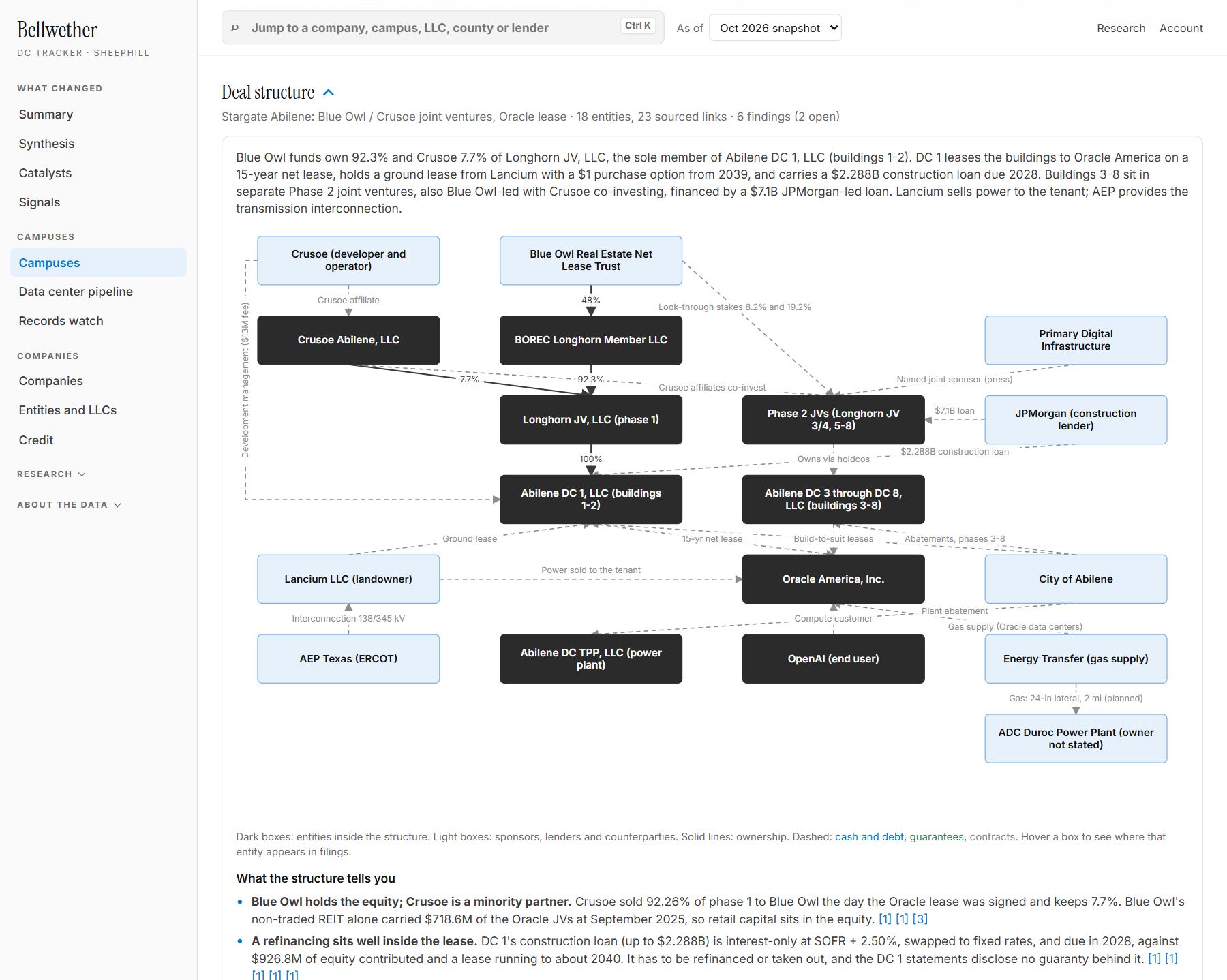
The actual DC Tracker, as a developer, a lender and an investor would use it, and how it turns a new filing into a view on the securities exposed.
Bellwether
The AI buildout, tracked campus by campus
0GW of AI capacity announced for 2028
0GW the permit, power and financing records support
bellwether.sheephillgroup.com/tracker#ops
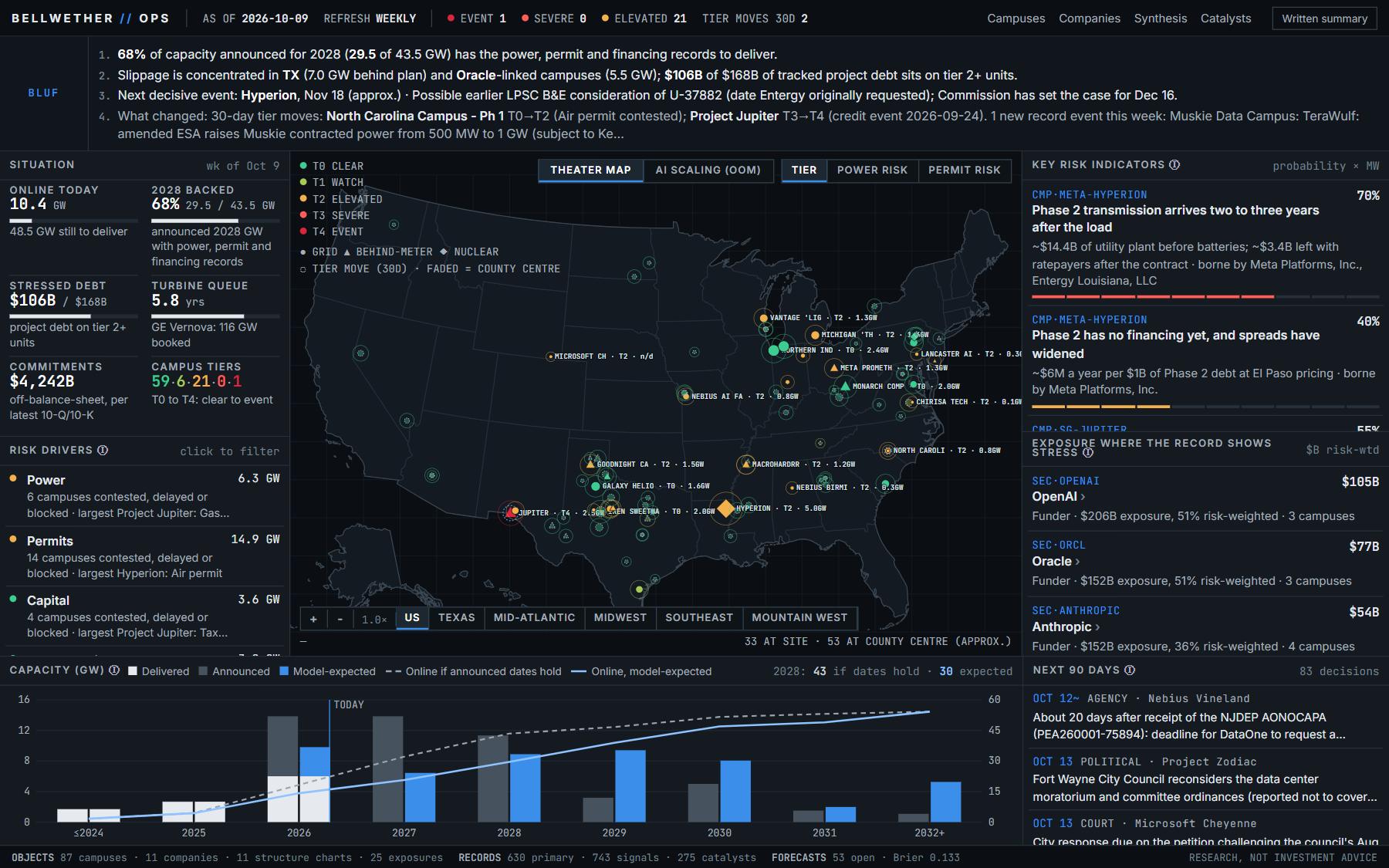
OverviewThe command view: the whole AI buildout on one screen. What changed this week, where 87 campuses stand and which risks are building.
bellwether.sheephillgroup.com/tracker#ops/vantage-port-washington
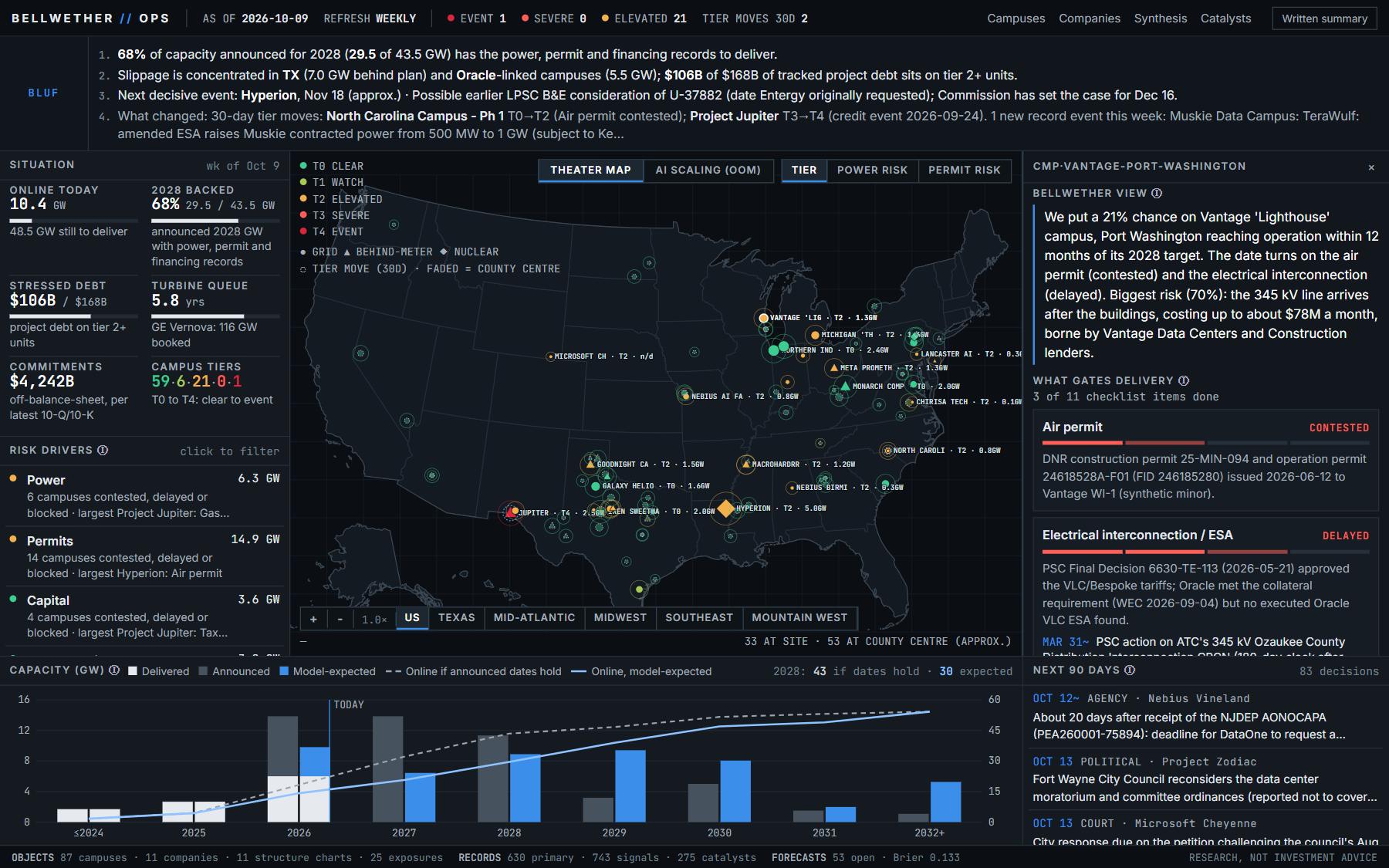
OverviewClick any campus for our view: the odds it delivers on time, the two or three items that gate the date and how each is progressing.
bellwether.sheephillgroup.com/tracker#ops?layer=oom
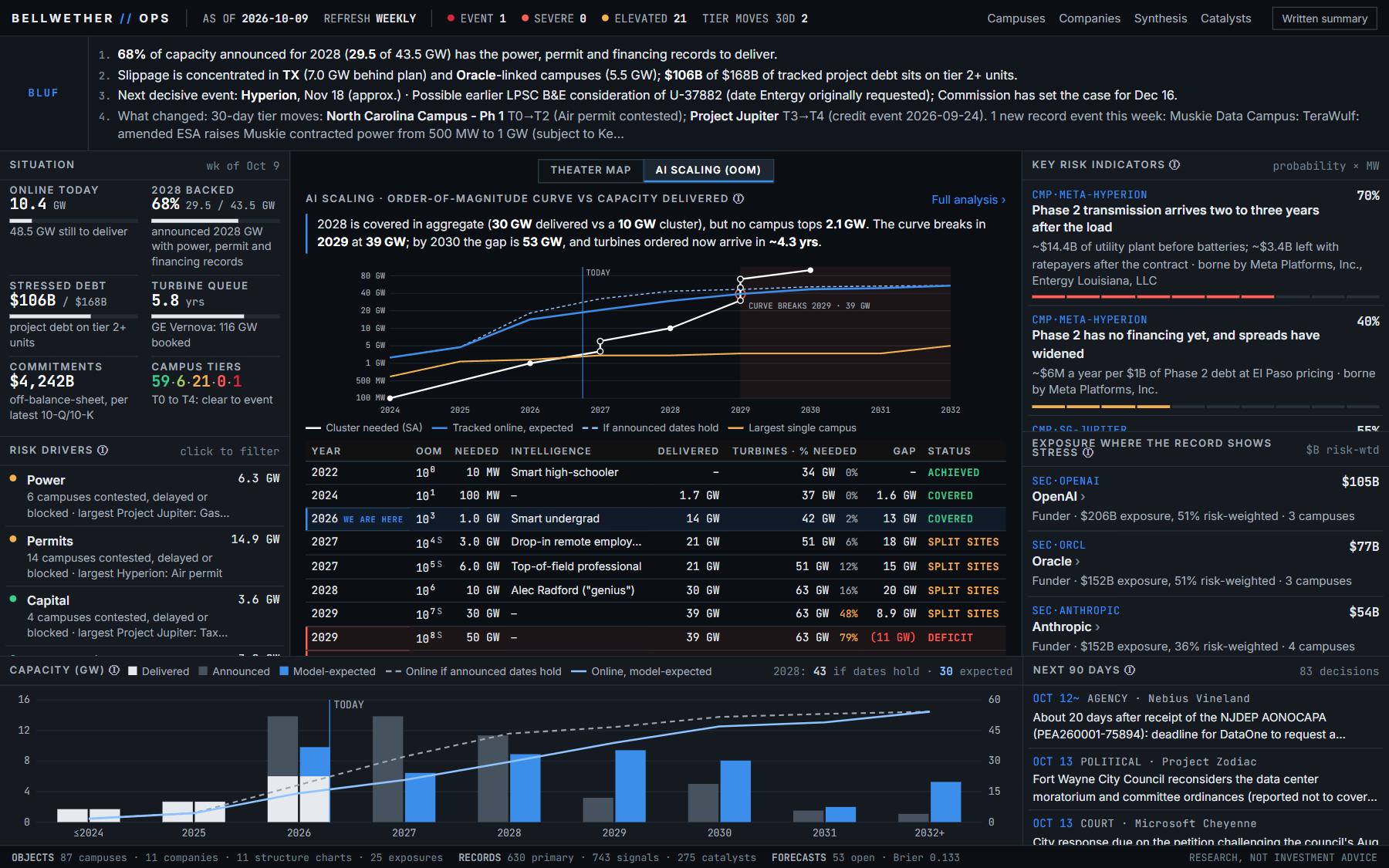
OverviewSwitch layers to see campus delivery against AI scaling: the curve outruns delivered capacity in 2029.
bellwether.sheephillgroup.com/tracker#campuses
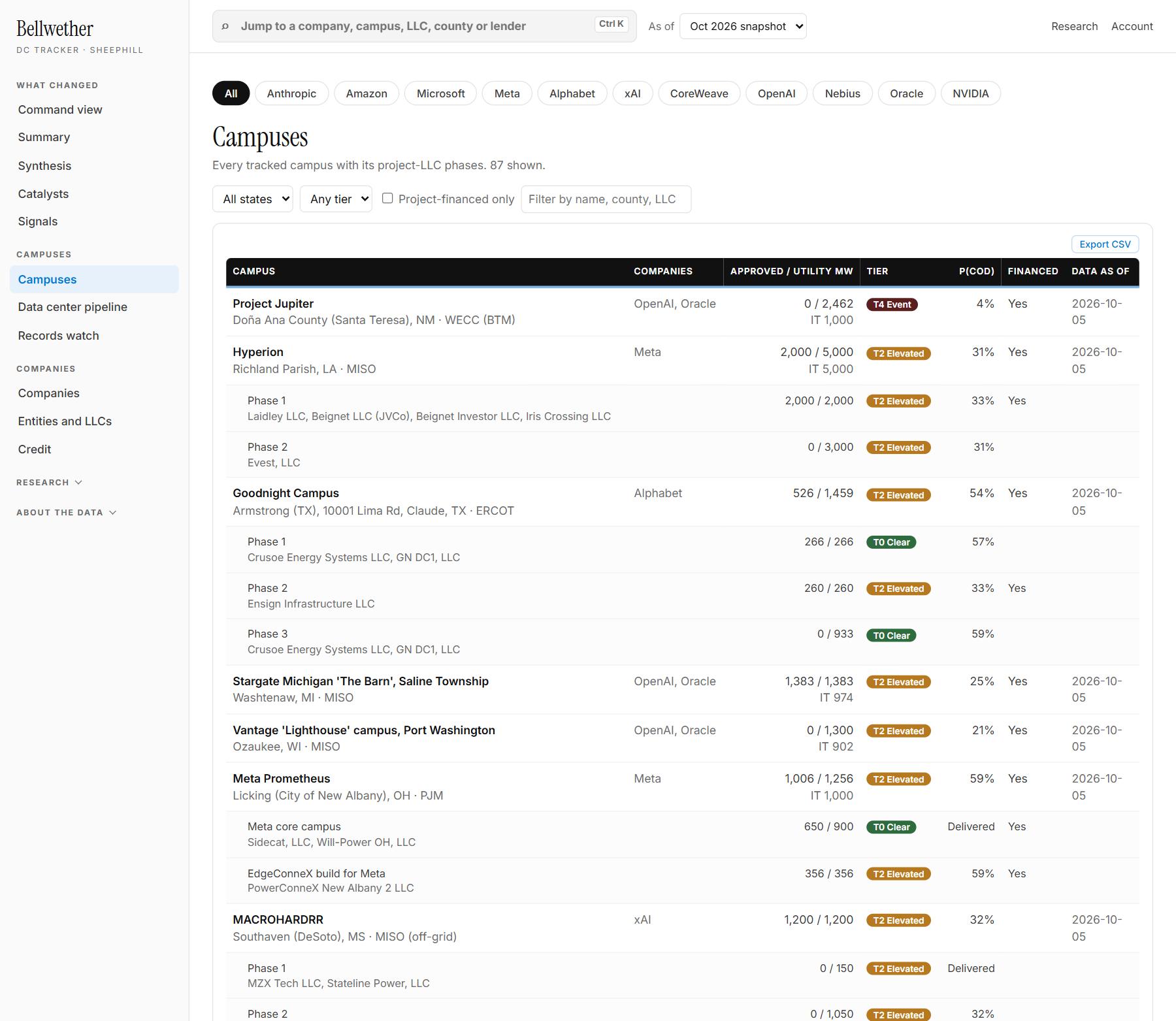
Overview87 campuses, each scored on the records behind it, from on track to stalled.
bellwether.sheephillgroup.com/tracker#campus/meta-hyperion
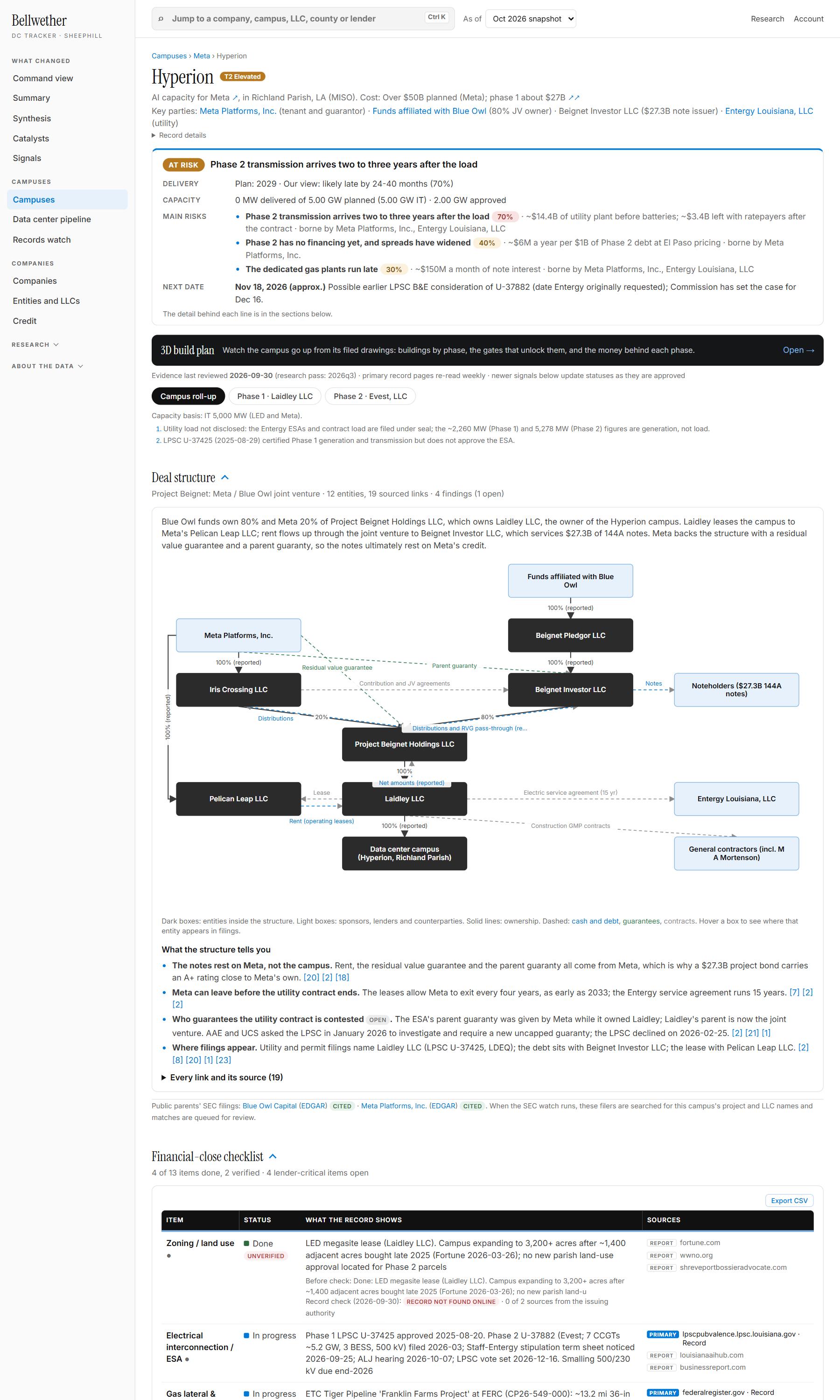
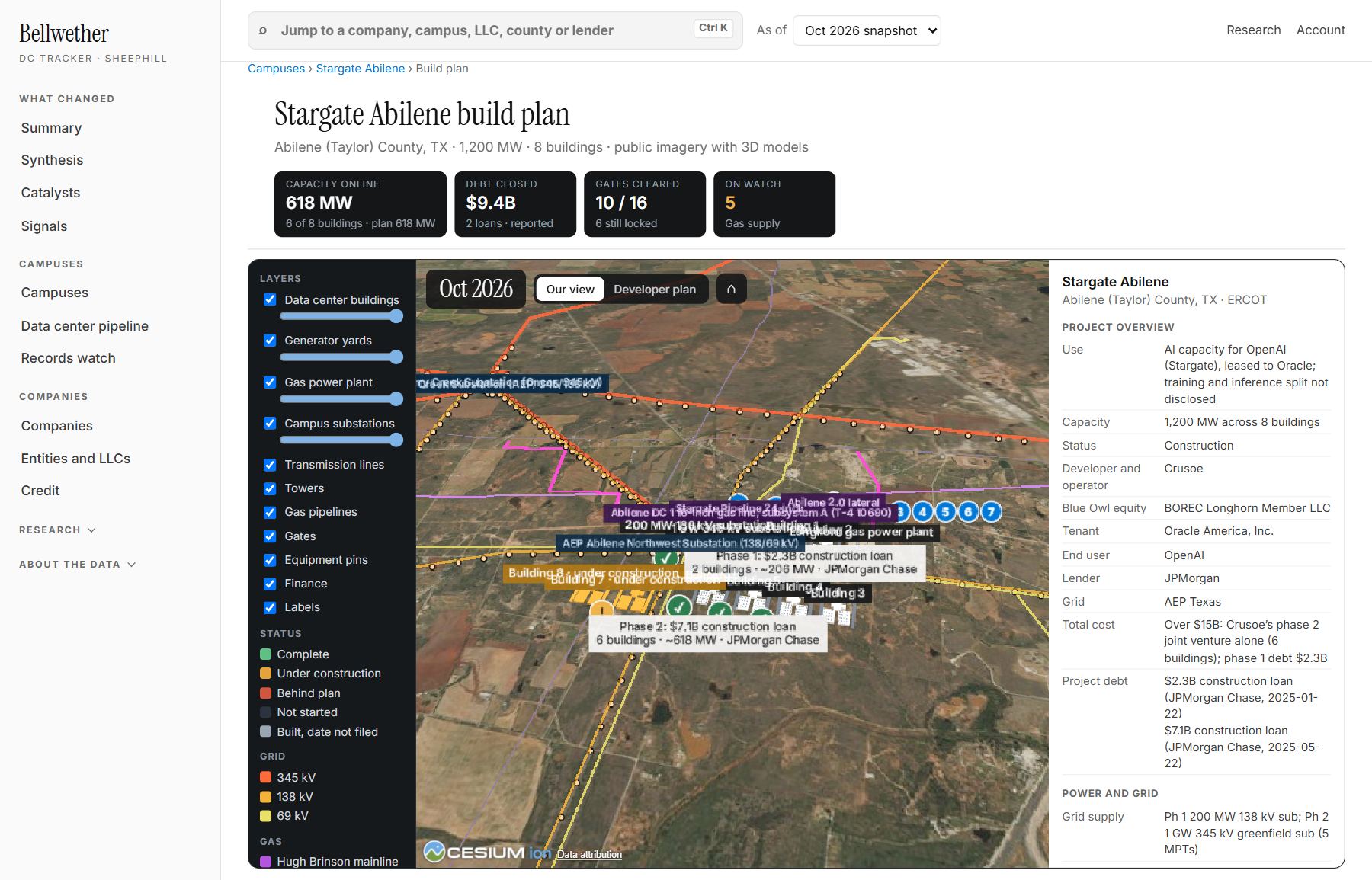
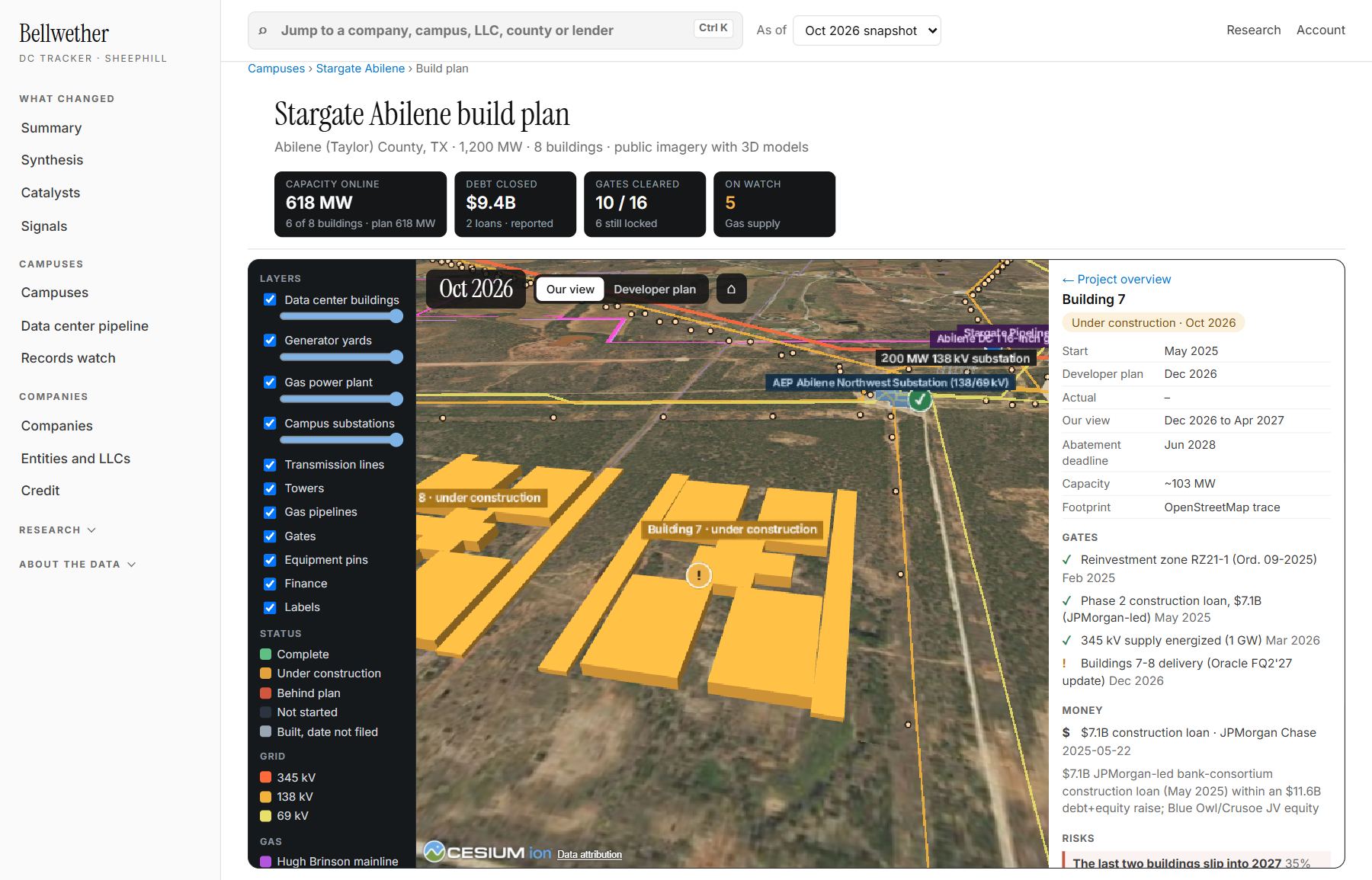
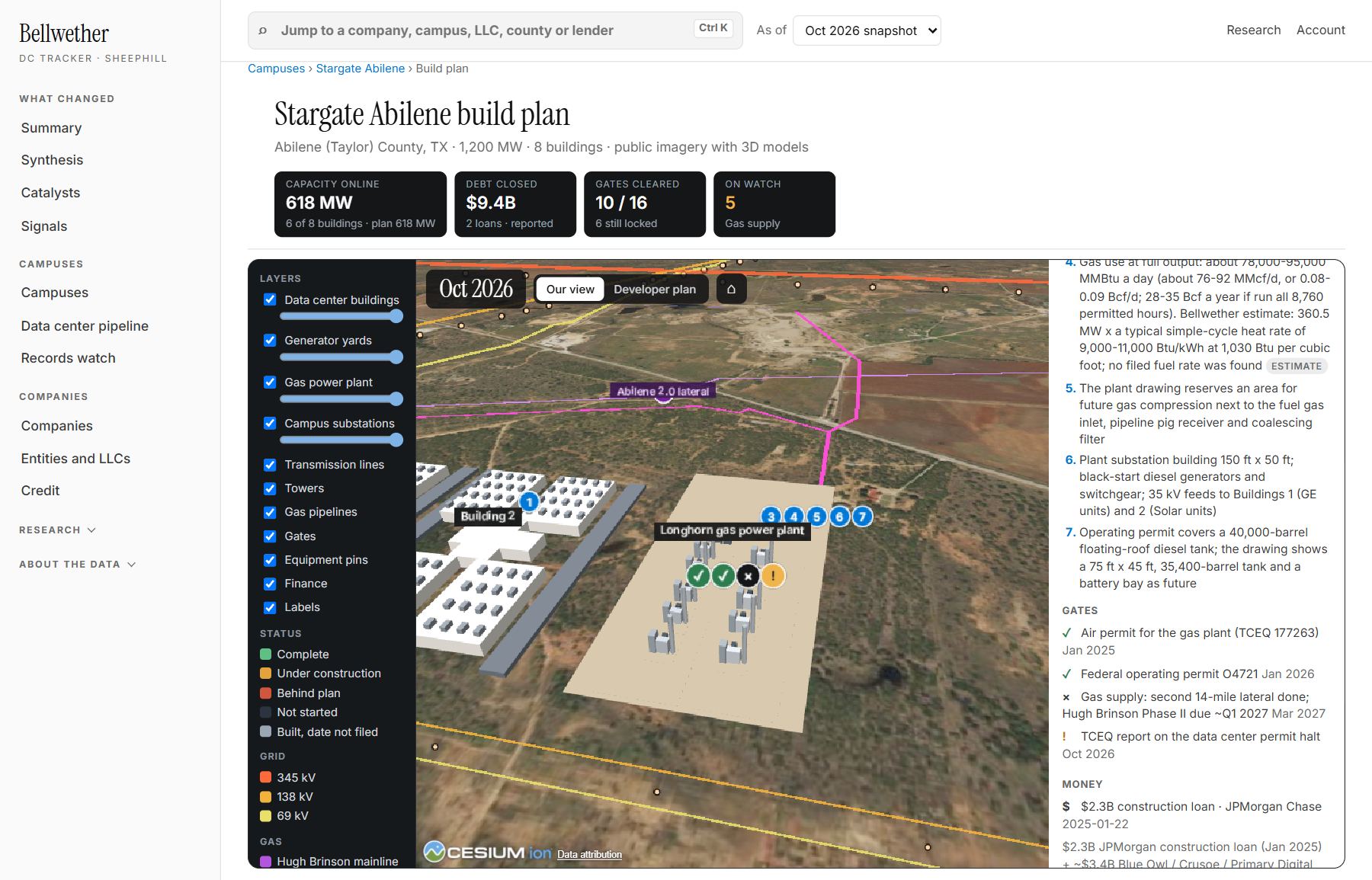
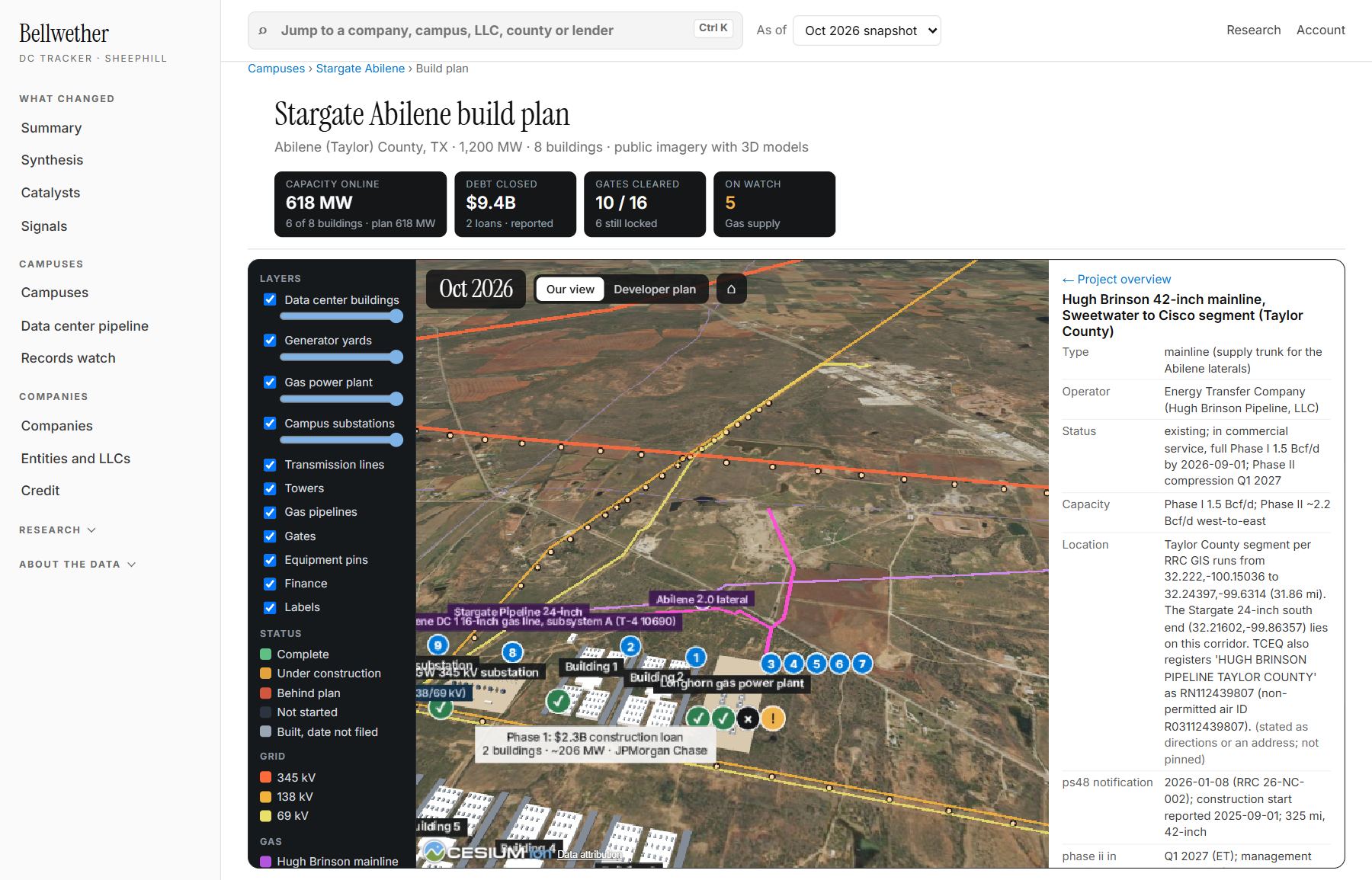
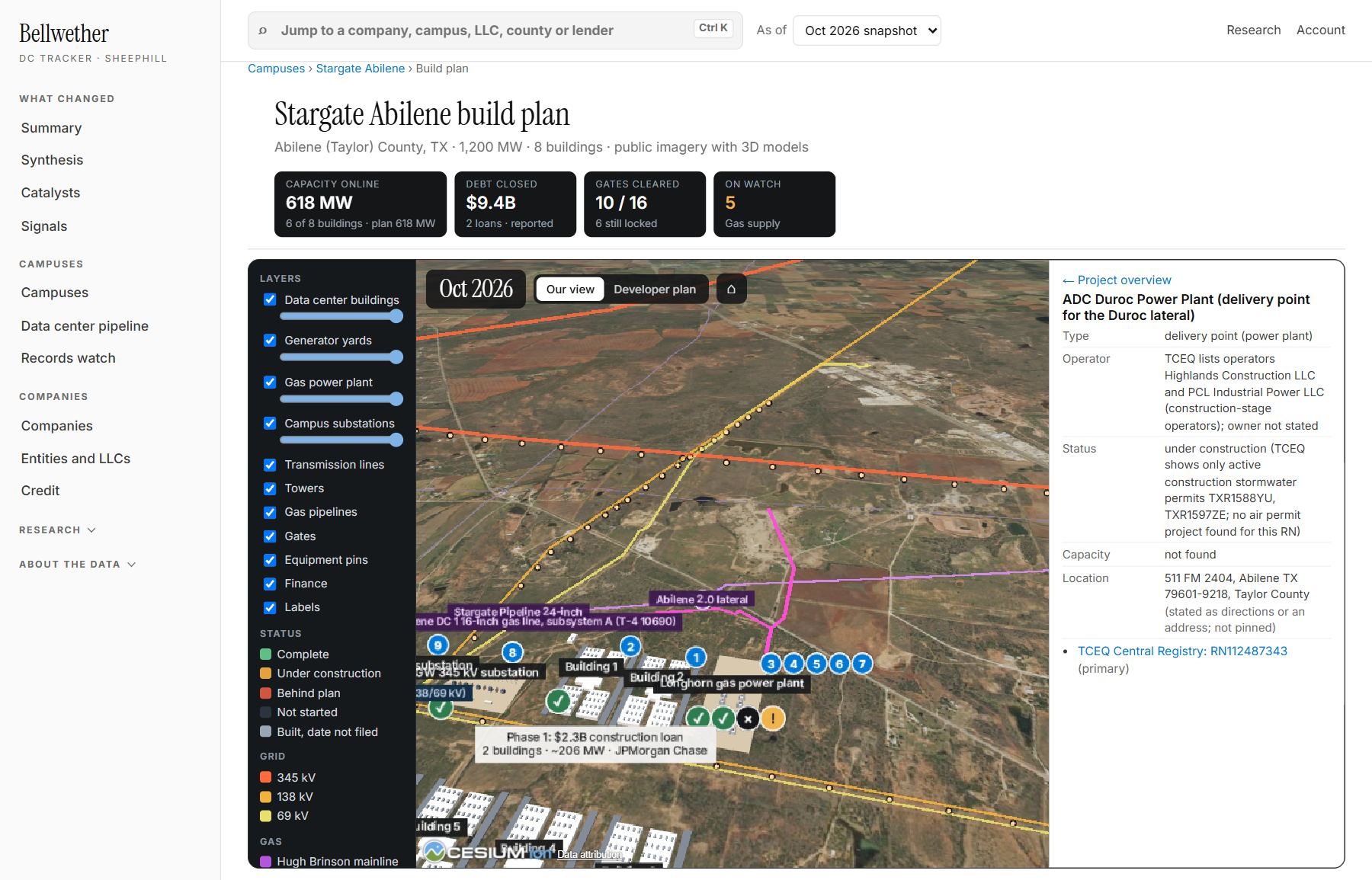
For developersEvery permit, interconnection and financing gate on a competing campus, with the issuing authority’s own record behind each line.
bellwether.sheephillgroup.com/tracker#campus/meta-hyperion
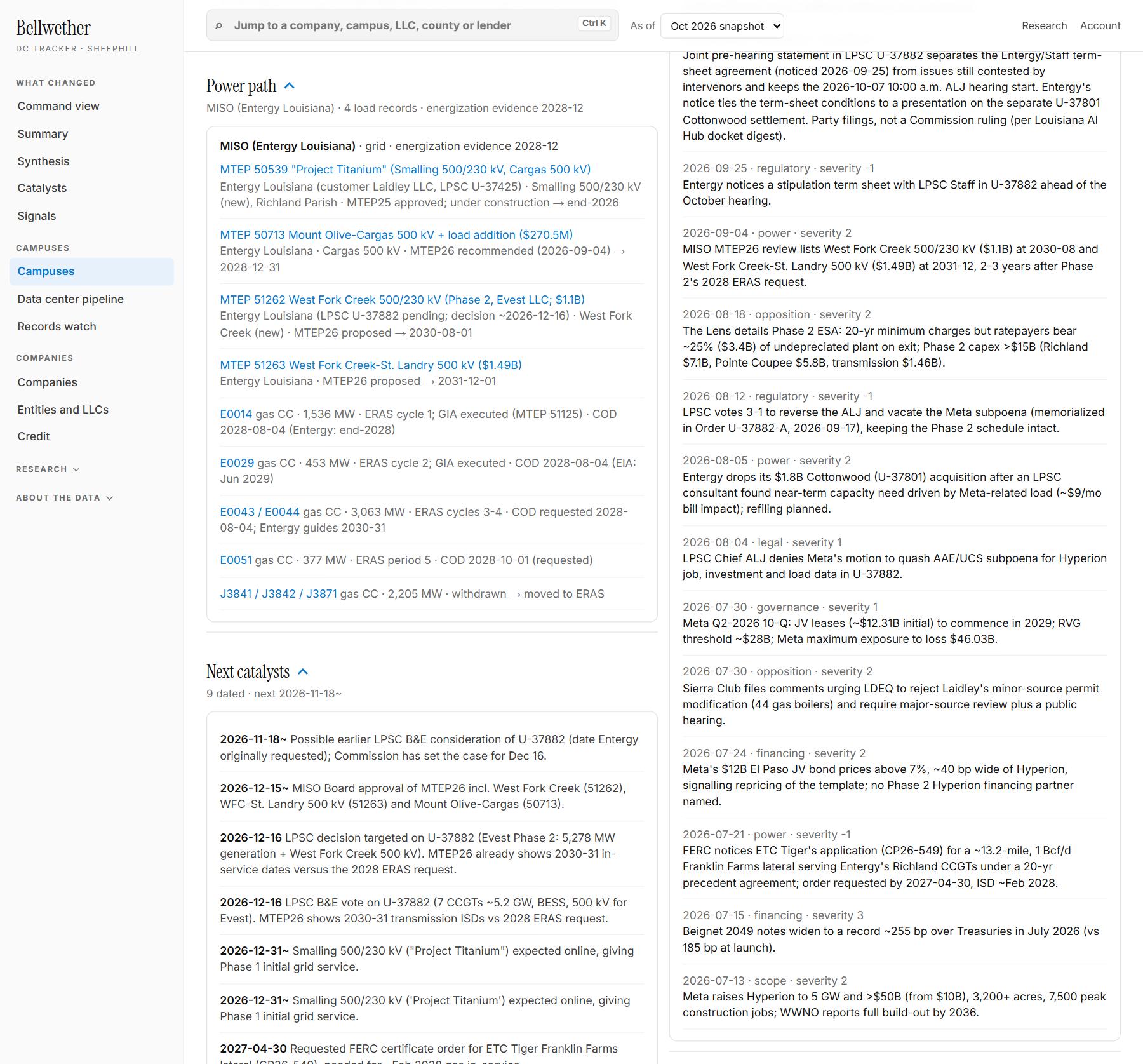
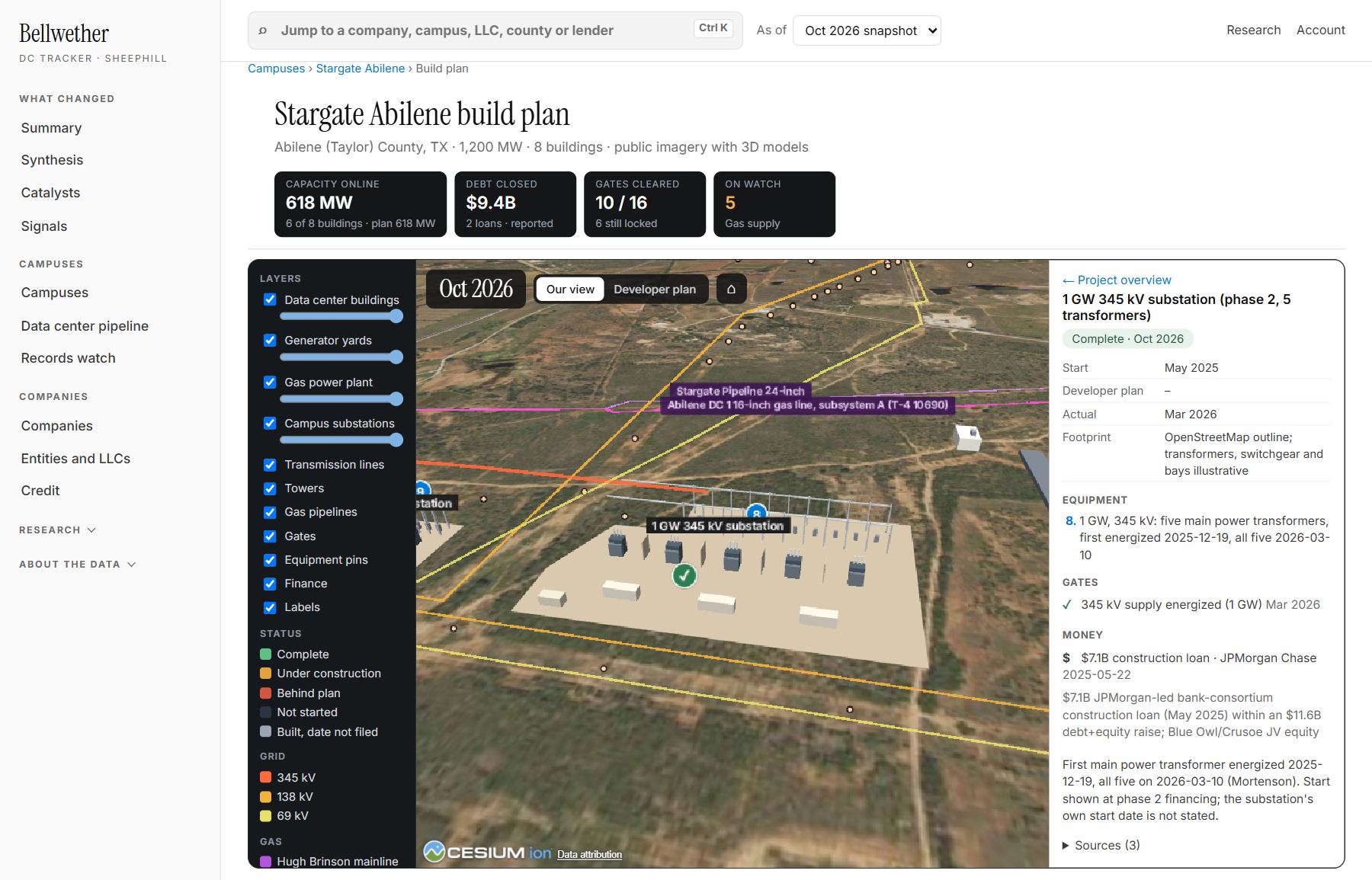
For developersThe power path, energization dates and every dated signal from utility dockets, county councils and courts.
bellwether.sheephillgroup.com/tracker#equipment
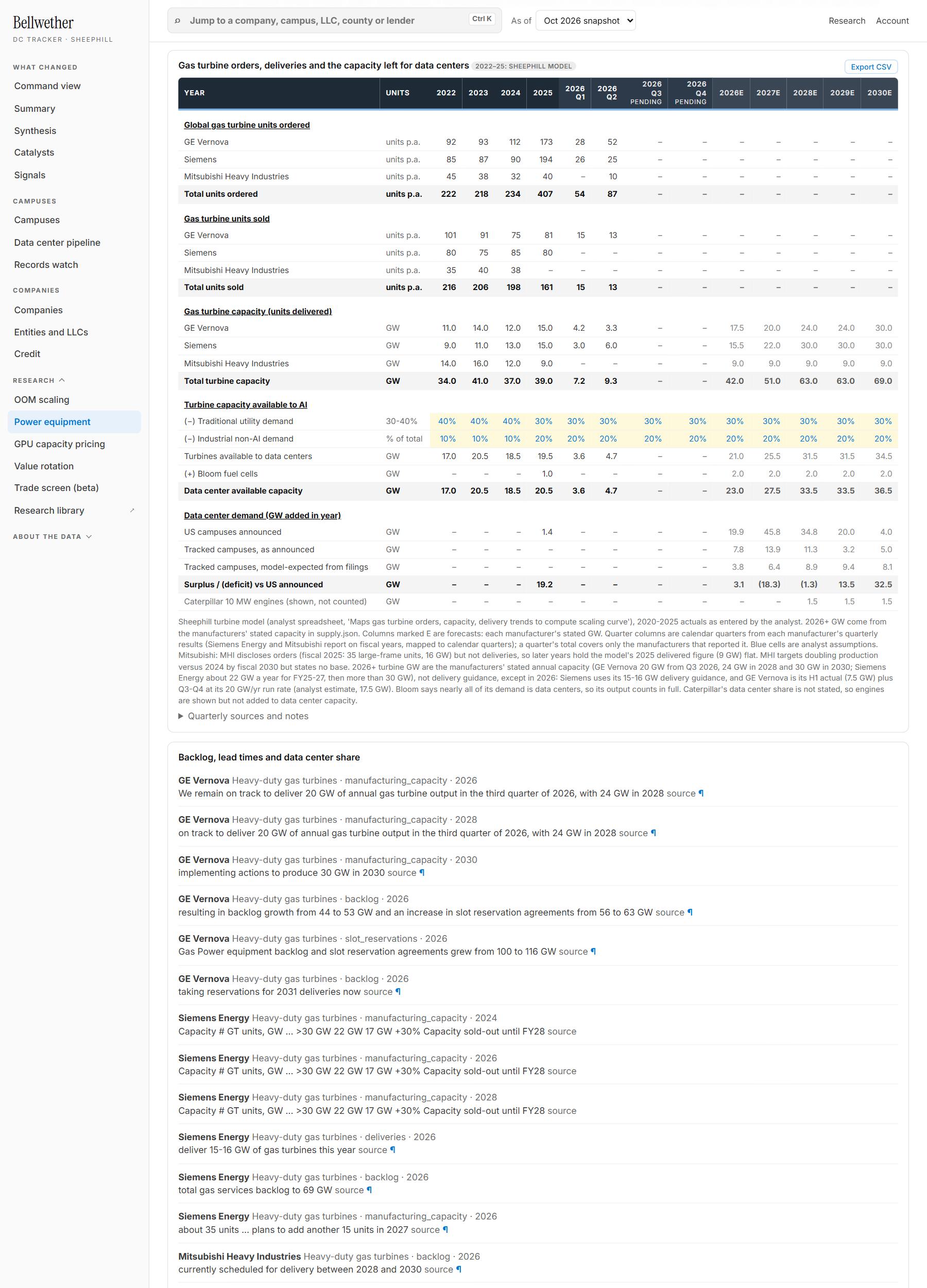
For developersTurbine backlogs from the manufacturers’ filings: GE Vernova has 5.8 years of output committed. Know the queue before you commit to a site.
bellwether.sheephillgroup.com/tracker#case/lighthouse
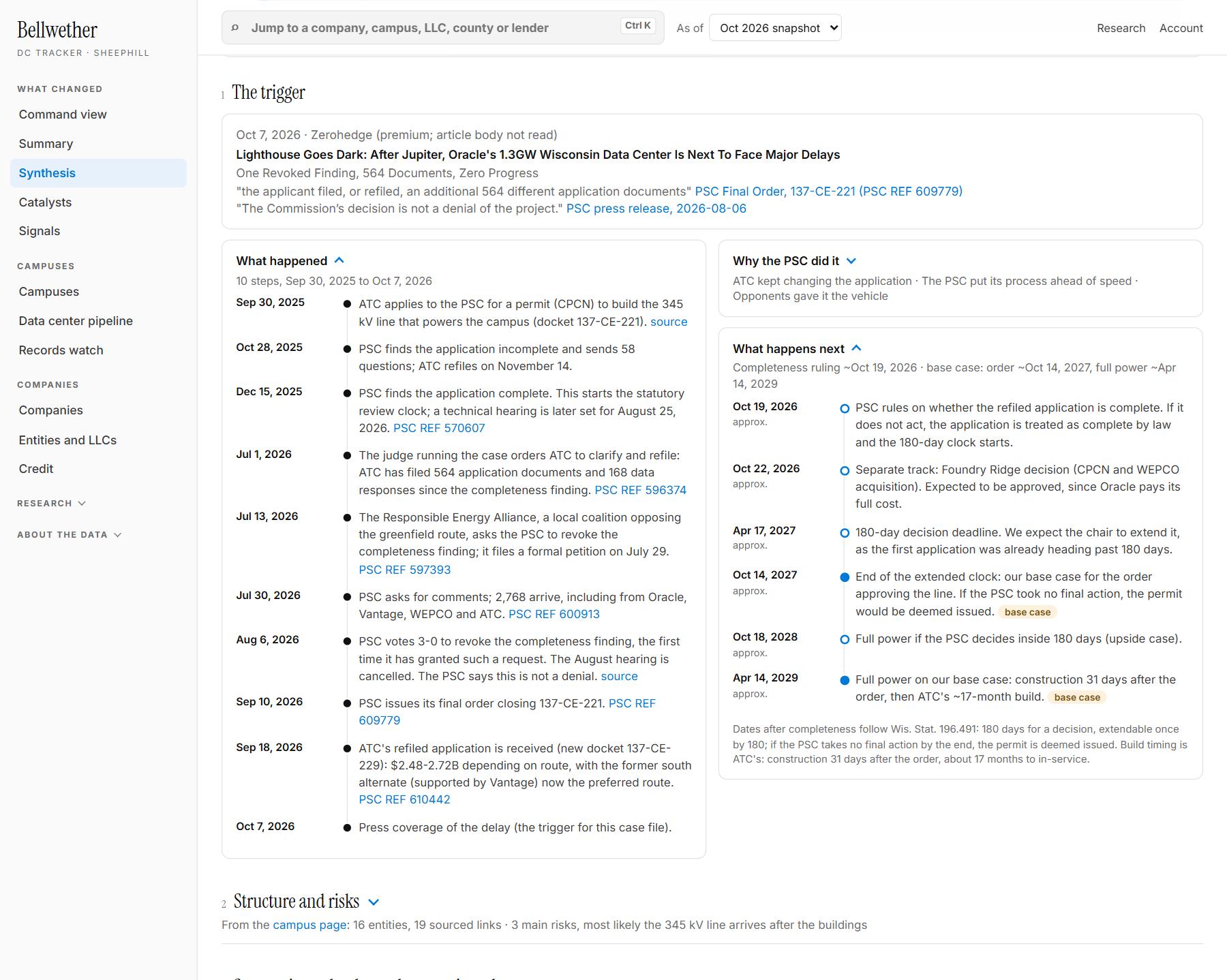
SynthesisA docket moves. Synthesis lays out what happened, why the regulator acted and what comes next, from the 42 documents behind Oracle’s 1.3 GW Project Lighthouse.
bellwether.sheephillgroup.com/tracker#case/lighthouse
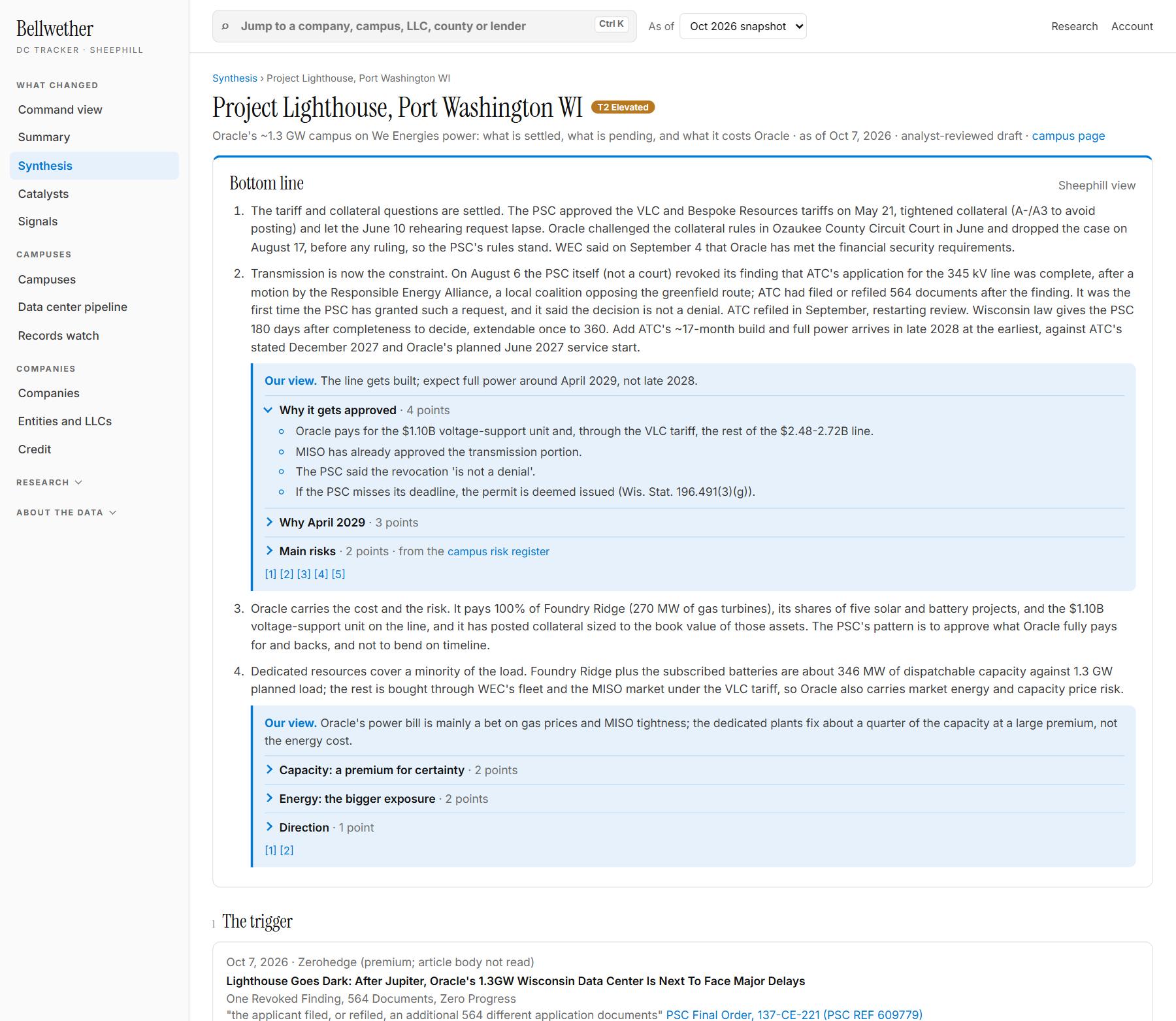
SynthesisThen it forms a view against the full campus record: the line gets built, with full power around April 2029, later than the schedule suggests.
bellwether.sheephillgroup.com/tracker#case/lighthouse
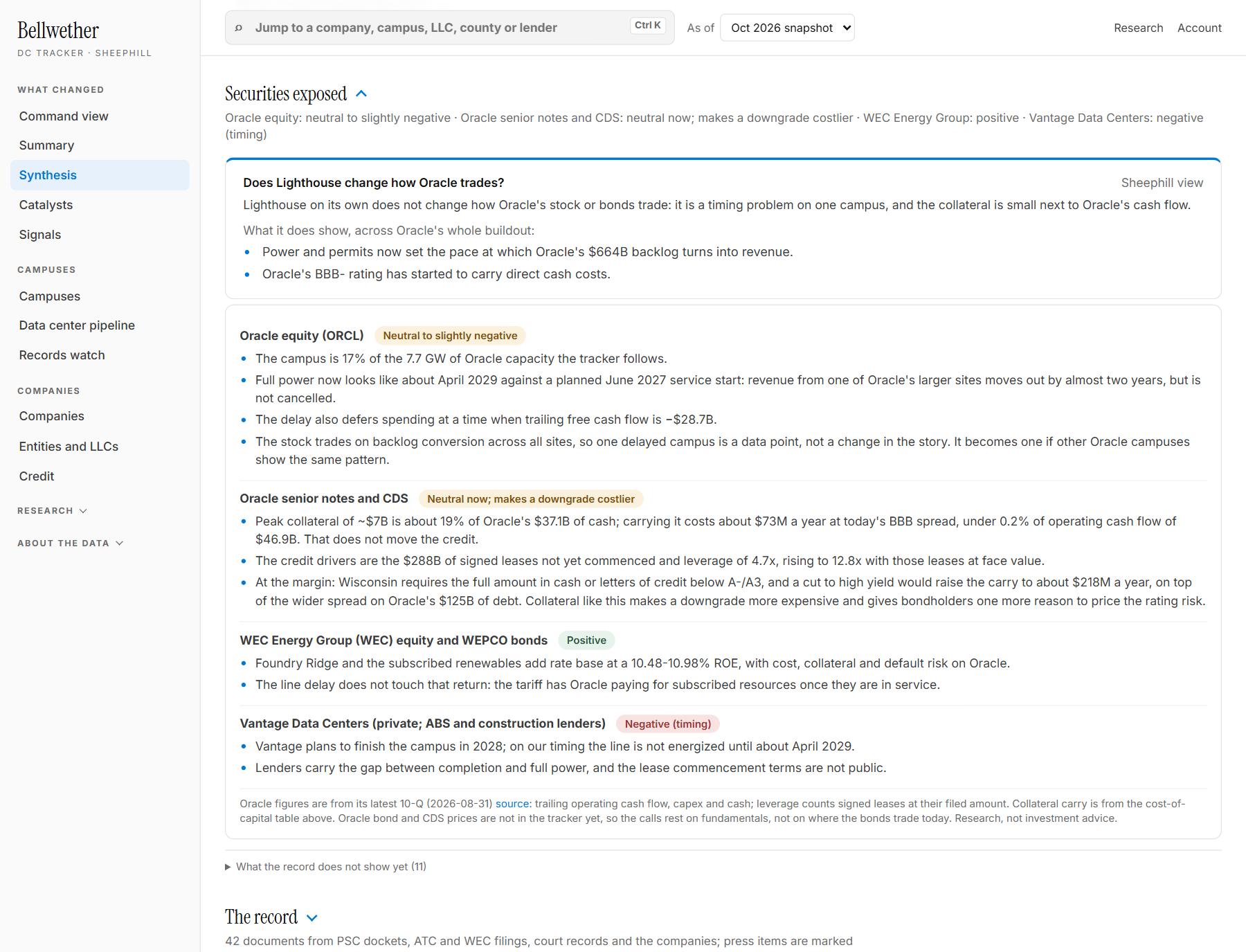
SynthesisAnd maps it to the securities exposed: Oracle’s stock and bonds, the utility and the developer, each sized against company filings.
bellwether.sheephillgroup.com/tracker#credit
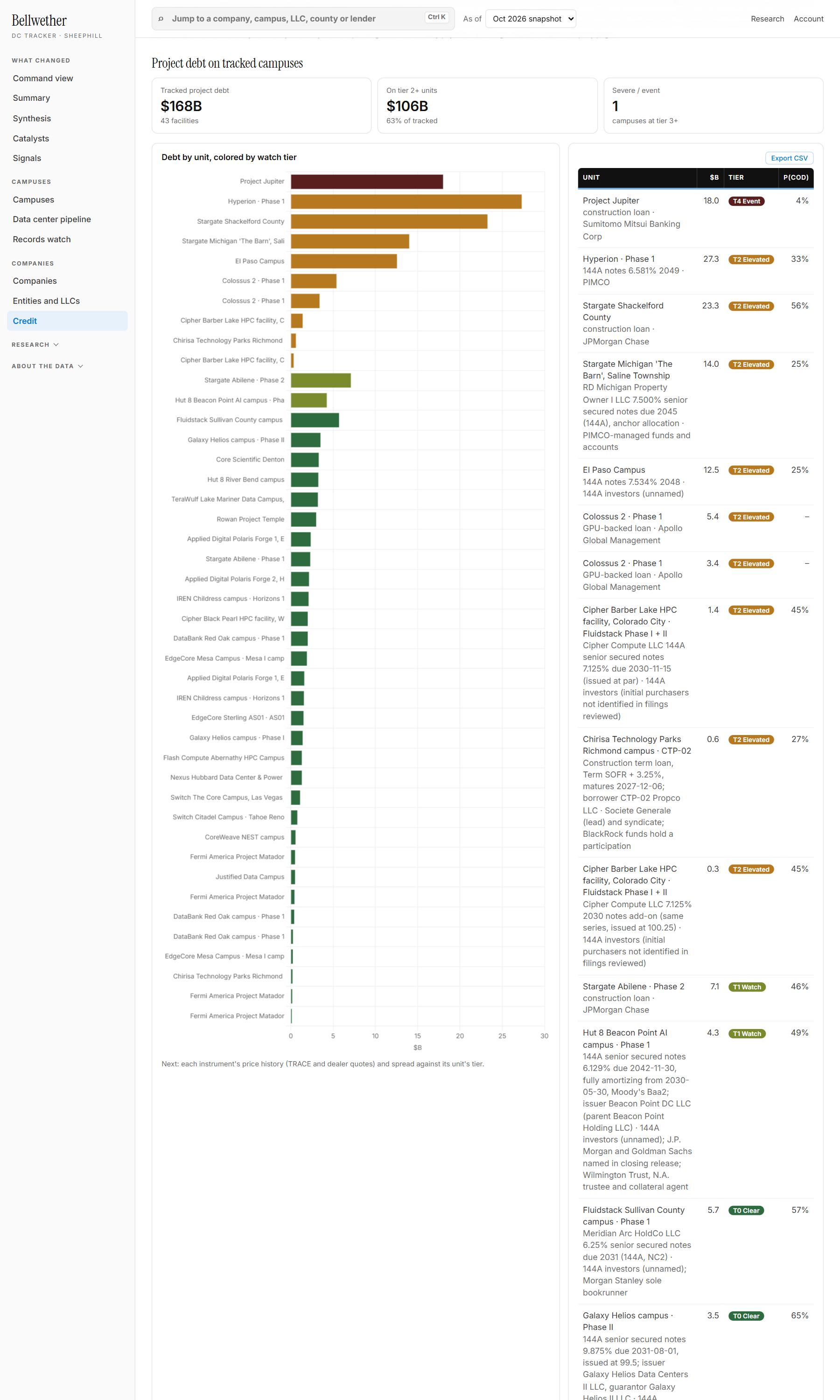
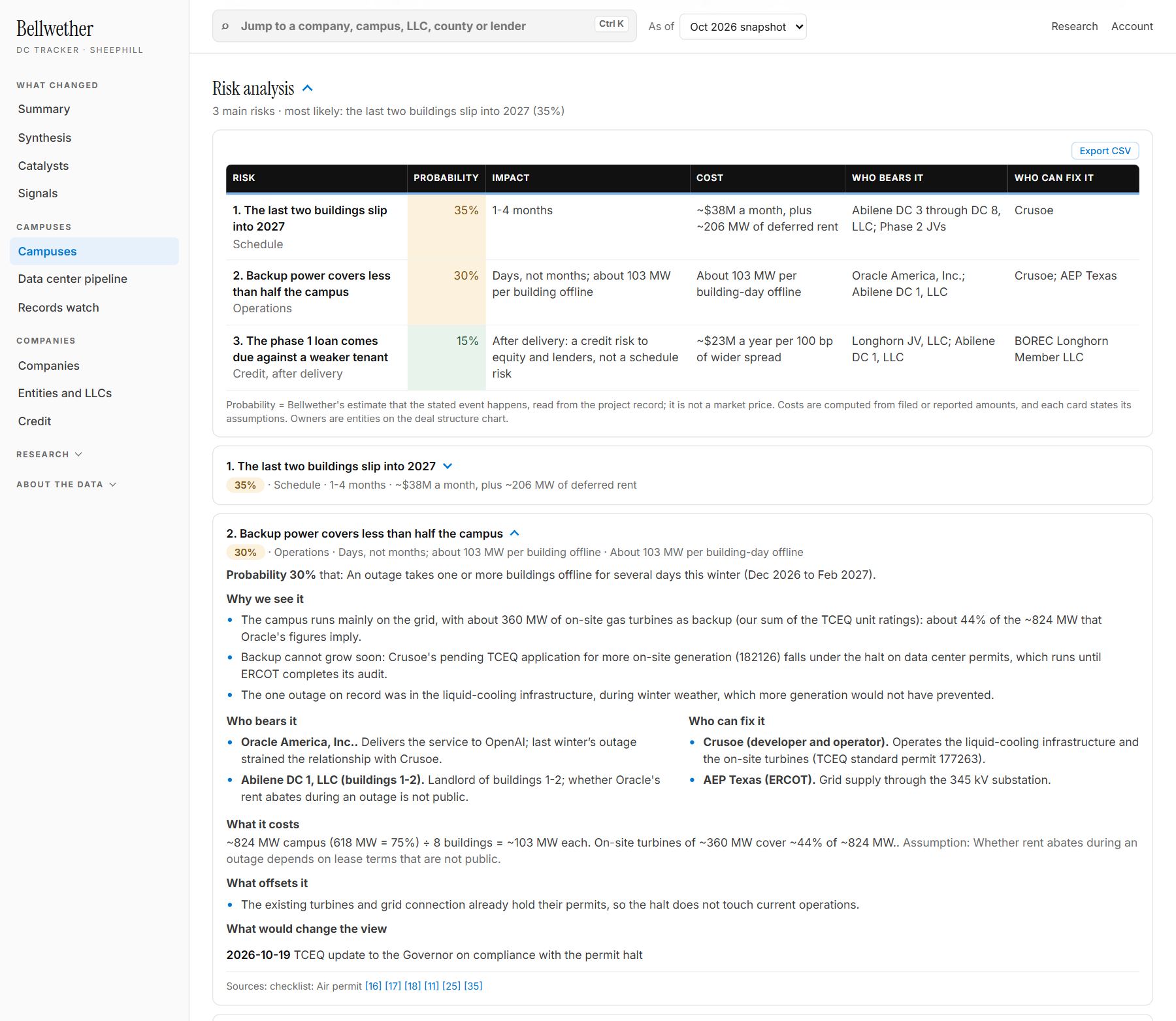
For lenders$106B of the $168B of tracked project debt sits on campuses at tier 2 or worse. See which loans, unit by unit.
bellwether.sheephillgroup.com/tracker#campus/sg-jupiter
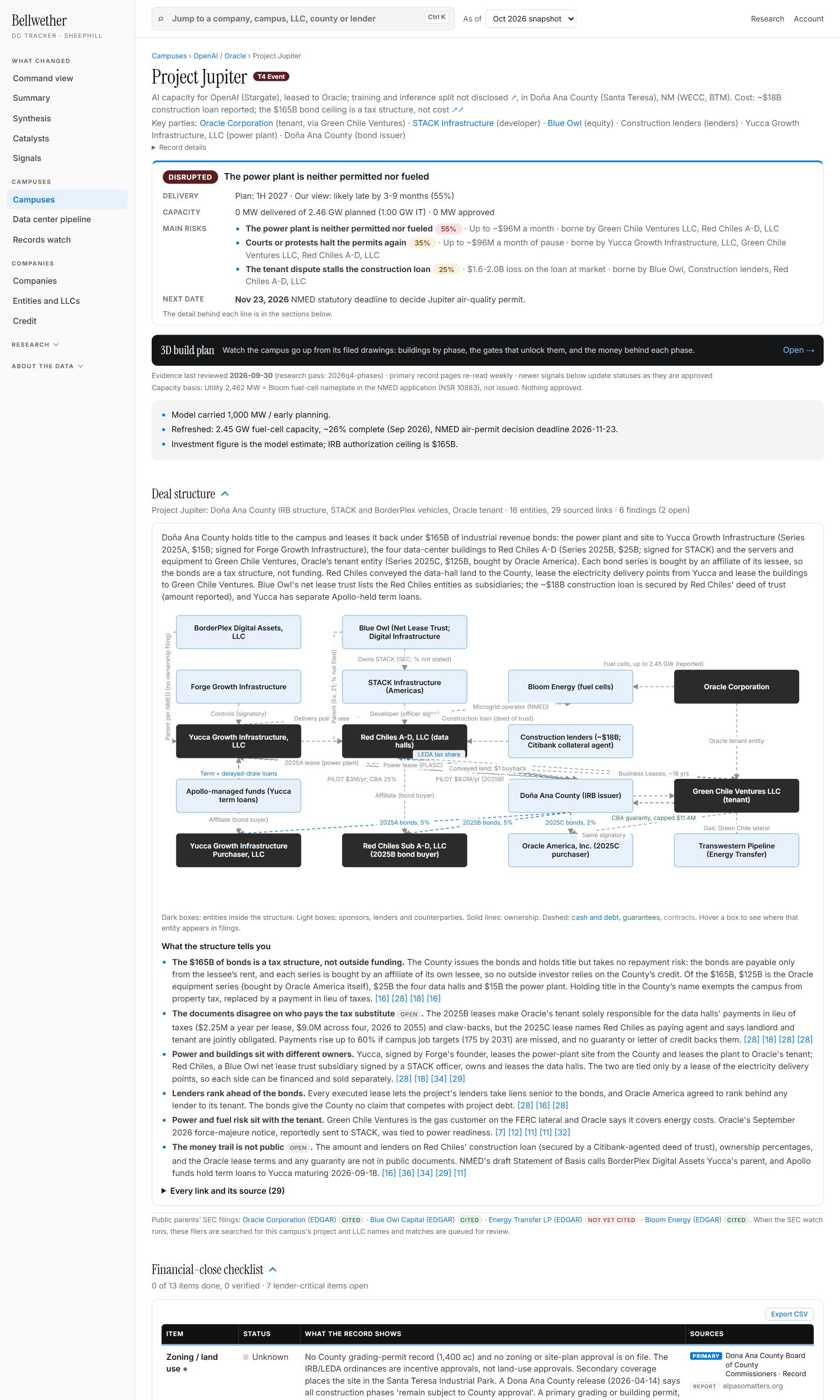
For lendersProject Jupiter was flagged High 66 days before Oracle’s force-majeure notice. The warning came from dockets and courts.
bellwether.sheephillgroup.com/tracker#catalysts
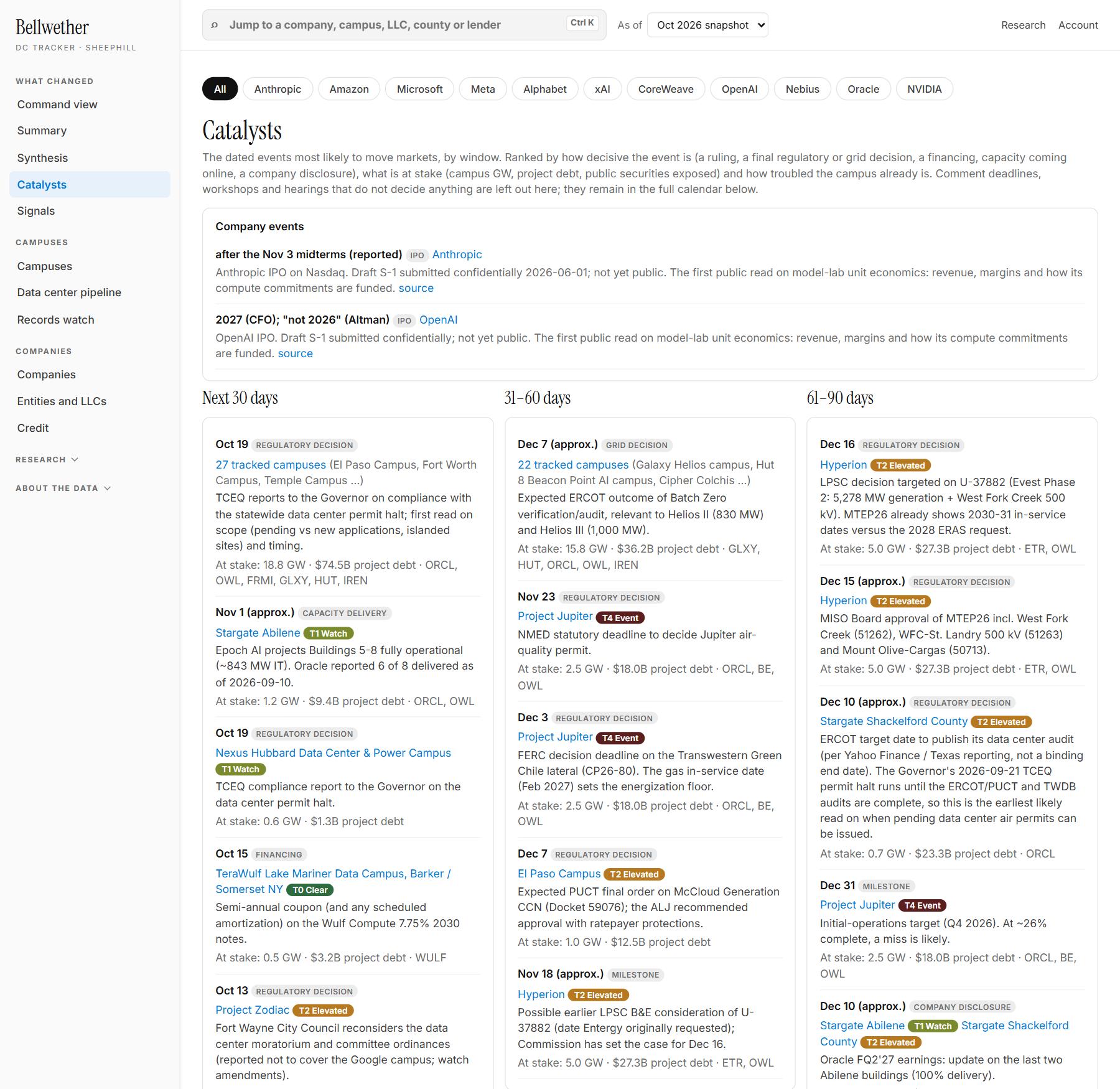
For investorsDated catalysts, ranked by what is at stake: rulings, grid decisions, county votes and the lab IPOs.
bellwether.sheephillgroup.com/tracker#company/Oracle
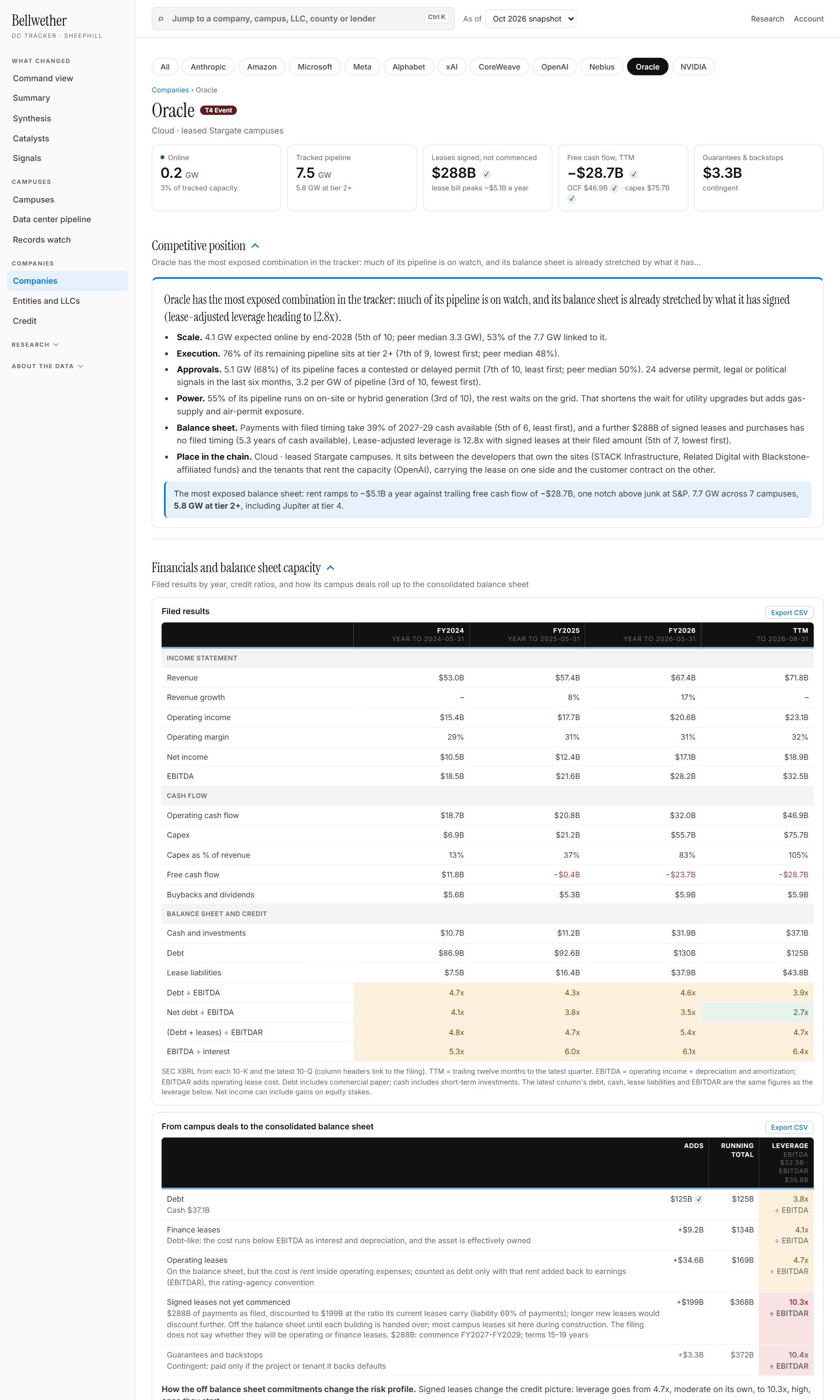
For investorsCompany positions built from the campuses up. Oracle: 76% of its pipeline on watch, leverage heading to 12.8x.
bellwether.sheephillgroup.com/tracker#company/Anthropic
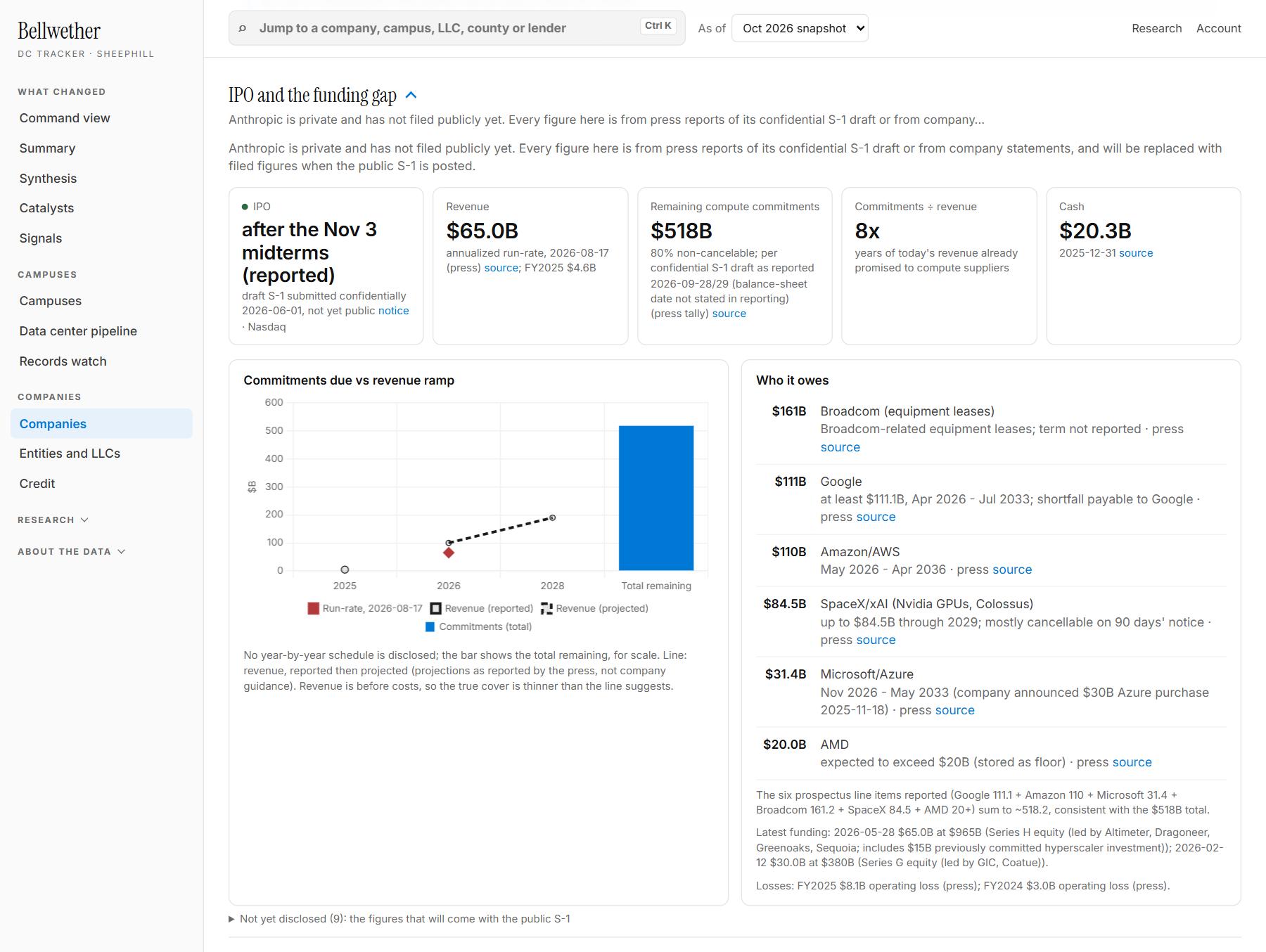
For investorsThe lab IPOs and the commitments behind them: $518B promised against $65B of run-rate revenue.
bellwether.sheephillgroup.com/tracker#records
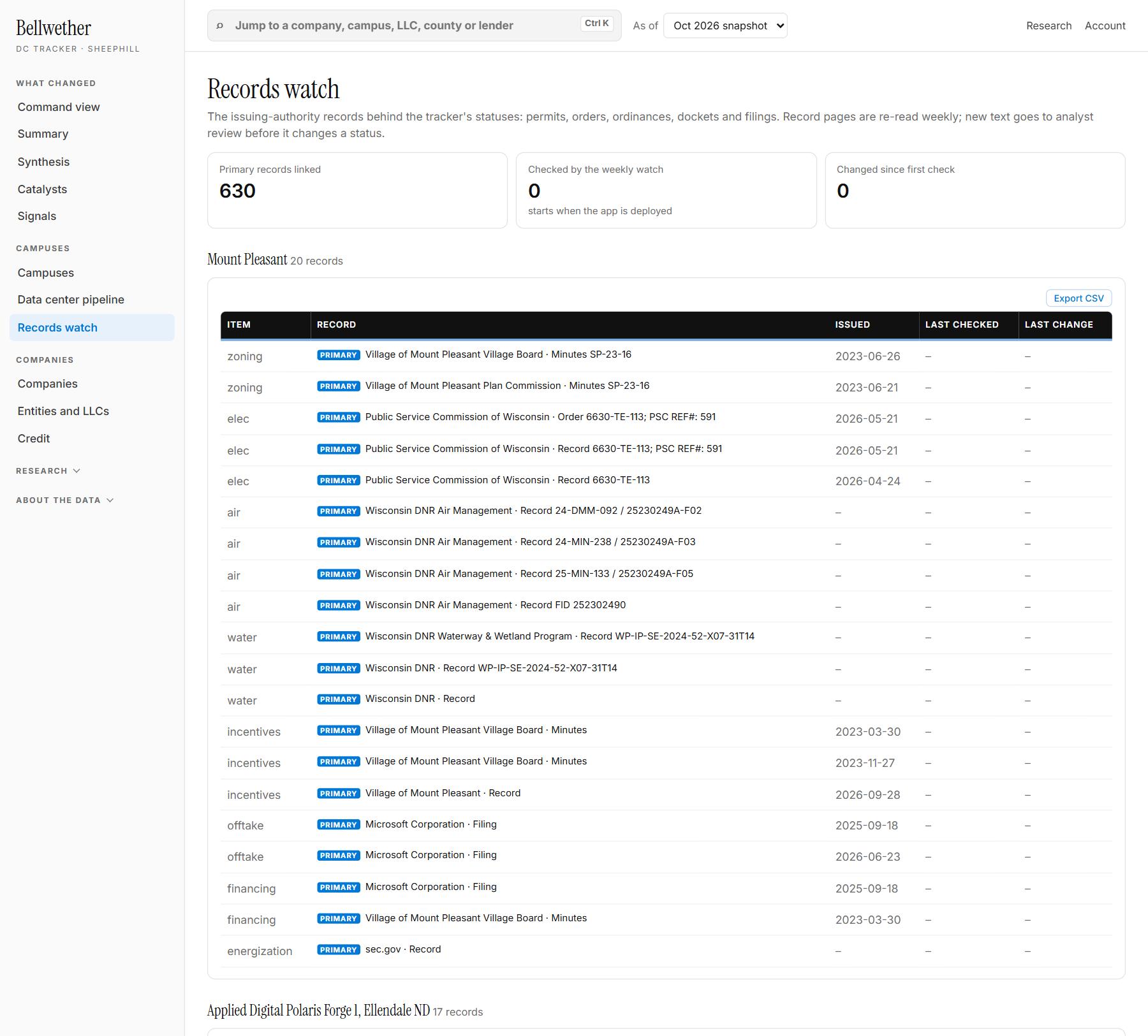
ProofEvery status traces to a primary record: permits, dockets, filings and meeting minutes, re-read weekly.
Bellwether
Know which AI campuses will deliver, and who is exposed if they do not.
Request accessFree for approved users during the private beta