Independent research

Capturing alpha at the periphery

Built to help investors understand the convergence of three sectors: energy, infrastructure and national security.

Scroll
Why Sheephill exists

As sector lines blur and AI adoption accelerates, understanding infrastructure and real asset characteristics becomes increasingly important for investors.

Energy

Power is now the limit on AI. Turbine backlogs, interconnection queues and fuel supply set how fast compute can grow.

Infrastructure

Power, data centers and chips are merging into one system, while most equity analysts still cover each sector in isolation.

National security

Critical minerals, power equipment and semiconductor supply chains are being brought onshore, and governments are backing them with policy.

As AI capex has scaled to an unprecedented level, project development risk now drives a growing share of investor outcomes. Whether a campus delivers on time depends on permits, power and financing that are set in county agendas, utility dockets and lender filings, well before they show up in company guidance.

Bellwether was built to solve this problem. It reads each major AI campus through the documents behind it, so investors can see which projects will deliver, when, and who is exposed if they slip.

Bellwether

The AI buildout, tracked campus by campus

Execution risk for every major AI campus, tied to the permits, power and financing behind it, and to the stocks, bonds and loans exposed.

Coverage

Energy, infrastructure and national security.

Electrical substation, aerial
The experience behind it

Built on a decade of infrastructure private equity

Sheephill draws on ten years in infrastructure and real assets private equity: project finance at GE Energy Financial Services, infrastructure investing at APG and CIM Group, and power contracts for hyperscale data centers at Cypress Creek Renewables.

Underwriting a power plant, a pipeline or a data center campus means asking a different set of questions: what the asset would cost to replace, where it sits on the cost curve, who is contracted to buy its output, and what could stop it being built. Applied to listed companies, those questions have consistently pointed to opportunities that did not fit neatly in an allocation bucket.

2020

Shell and Exxon

The market saw

Oil majors priced as if ESG had ended oil.

The infrastructure read

Assets that would take decades and hundreds of billions to replace: LNG trains, refineries and pipelines the global economy still ran on, throwing off cash while the market priced them as stranded.

2022

Nvidia

The market saw

A video-game chip company.

The infrastructure read

The foundational layer of AI infrastructure. GPU chips developed from years of video-game graphics processing were uniquely suited to AI training, and the systems design and architecture expertise behind them could not be replicated overnight.

2023

Meta

The market saw

An ad business overspending on the metaverse.

The infrastructure read

One of the largest owners of data center capacity. Capex going into owned campuses and compute builds an asset base, and the infrastructure question is what that base earns once it is running.

2024–25

Pilbara Minerals

The market saw

A lithium miner priced for a collapsed market.

The infrastructure read

A cost-curve story: a low-cost producer with a cost structure and balance sheet designed to weather trough pricing, positioned for decades of demand growth from EVs, battery storage and robotics.

Publications

Research

In-depth analysis on infrastructure, energy and strategic investment themes. Notes marked Subscribers are included in Bellwether.

August 2026

Texas Pauses Data Center Interconnection Approvals: What the Abbott Audit Means for Capital

Analysis of Governor Abbott's ERCOT large-load queue audit and the five-gate framework for maximizing interconnection success in Texas.

Request access
August 2026

Neocloud Credit: GPU Rental Economics

Why compute is becoming an asset class, how GPU rental economics actually work across four pricing tiers, and why the capital structure favors lenders over equity.

Request access
March 2026Free

Return on Capital Employed: One of the Most Overlooked Metrics in Finance

Why ROCE remains the most honest measure of management quality in capital-intensive businesses, and how to apply it to today's hyperscalers.

Read report
March 2026

Bloom Energy (BE): Valuation & Trade Structure

Detailed valuation analysis and recommended trade structure for Bloom Energy, including entry points, position sizing, and risk management.

Request access
March 2026

Bloom Energy (BE): Initiating Coverage

Deep-dive analysis on Bloom Energy's fuel cell technology, hyperscaler data center opportunity, and valuation framework for the stock.

Request access
March 2026

Hyperscale Power Project Finance: The Integrated Major Advantage

Why integrated oil majors with existing CCGT portfolios hold structural advantages in hyperscale power project financing over independent developers.

Request access
March 2026Free

The Problem with Renewable-Only Power Procurement for AI Infrastructure

Why hyperscalers planning renewable-only power strategies face reliability challenges, and why behind-the-meter gas with CCS may be the operationally superior alternative.

Read report
January 2026Free

AI Infrastructure: Power, Bottlenecks & Investment Implications

Analysis of the structural power demand surge from AI data centers and the investment opportunities emerging across the energy infrastructure value chain.

Read report

Additional research and commentary on Substack.

Brian McGoldrick
Leadership

Brian McGoldrick

Founder

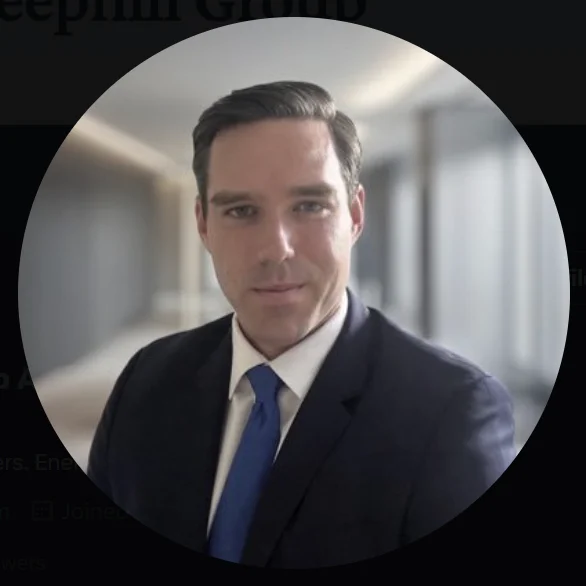
The Sheephill Group is led by Brian McGoldrick, an institutional investment professional with 10 years of experience navigating complex private markets in energy, critical infrastructure, and energy transition commodities. Prior to founding The Sheephill Group, Brian held investment roles with GE Capital Energy Financial Services, APG Asset Management, CIM Group and Cypress Creek Renewables.